|
Khai Loong Aw I am a Computer Science PhD candidate at Stanford University. I am fortunate to be advised by Daniel Yamins. I am deeply grateful to have been mentored by Antoine Bosselut and Martin Schrimpf at EPFL (2023), and Mariya Toneva at MPI-SWS (2022). In my free time, I like to draw, rock climb, dance, and cook. When I was young, I also represented Singapore playing chess. |

|
ResearchI am building models to do everything humans can do – vision, language, reasoning, world modeling, action, etc. I also use them as computational hypotheses for studying development, cognition, and the brain. |
|
|
Ψ-0.6: Adaptive Streams of Thought in a Unified Vision-Language World Model
Khai Loong Aw*, Klemen Kotar*, Baihan Zhang*, Yifan Liu*, Lilian Chen, Atlas Kazemian, Rahul Venkatesh, Daniel Yamins 2026 arXiv / GitHub Chain-of-thought transformed AI reasoning, but it is limited to words. What's the physical-world analogue? We introduce Ψ-0.6, one model that reasons in streams of thought: words, depth, motion, camera pose, and imagined scenes – and learns which to use for each problem. Ψ-0.6 surpasses leading open-weight models zero-shot on challenging spatial reasoning and makes two breakthroughs. First, it thinks beyond words, in streams of thought. Second, it learns how to think: which representation to use, and when. |
|
Zero-shot World Models Are Developmentally Efficient Learners
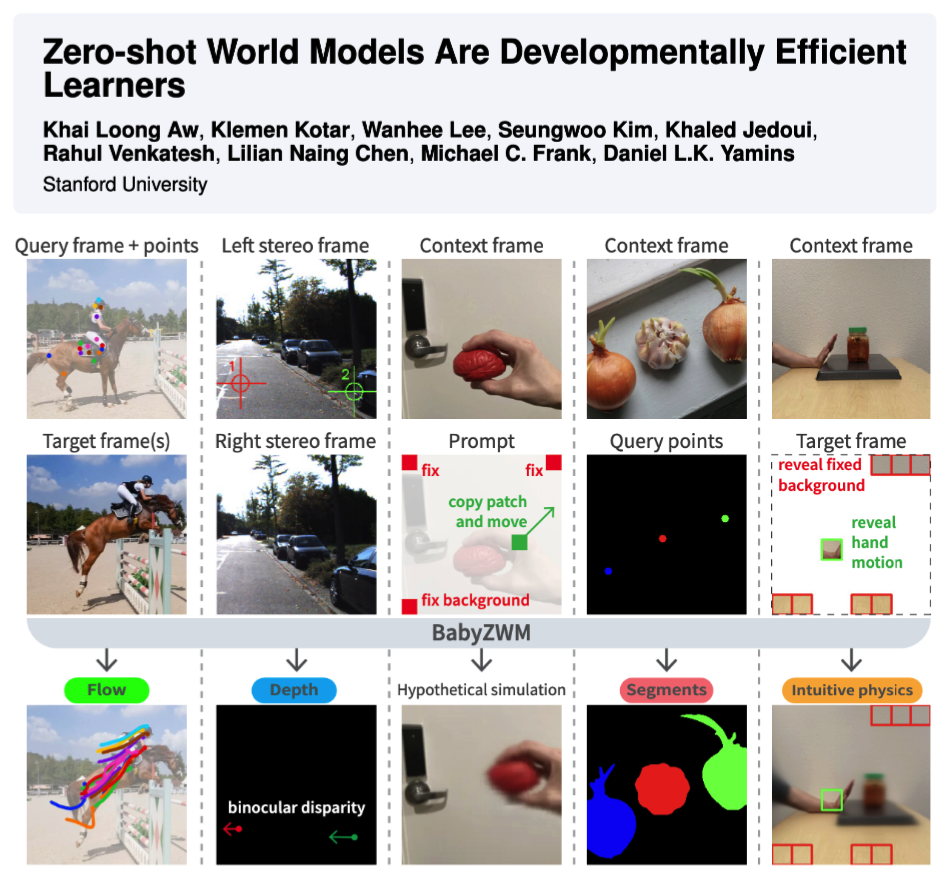
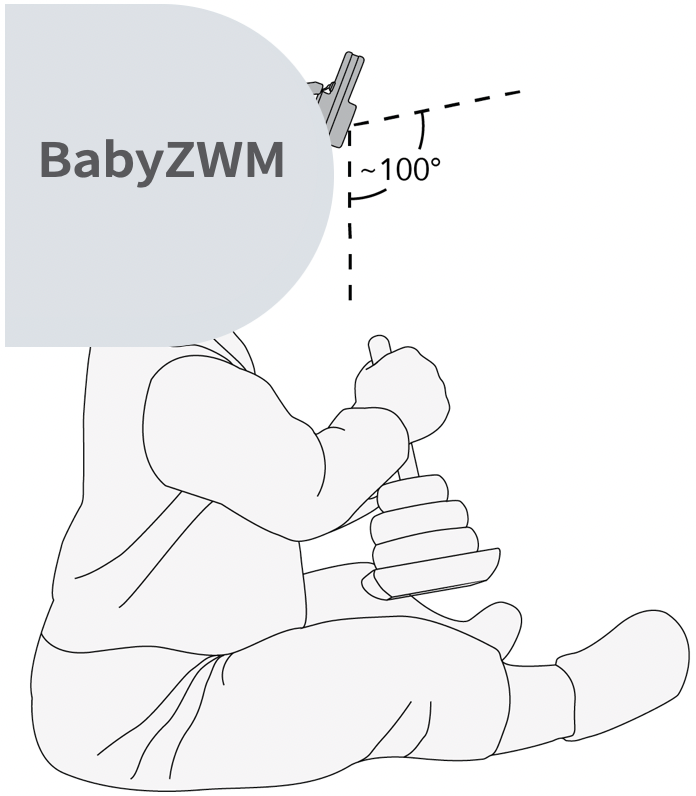
Khai Loong Aw, Klemen Kotar, Wanhee Lee, Seungwoo Kim, Khaled Jedoui, Rahul Venkatesh, Lilian Naing Chen, Michael C. Frank, Daniel L.K. Yamins 2026 arXiv / Tweet / GitHub / HuggingFace Today's best AI needs orders of magnitude more data than a human child to achieve visual competence. We introduce the Zero-shot World Model (ZWM), an approach that substantially narrows this gap. Even when trained on the first-person experience of a single child, BabyZWM matches state-of-the-art models on diverse visual-cognitive tasks – with no task-specific training, i.e., zero-shot. Our work presents a blueprint for efficient and flexible learning from human-scale data, advancing a path toward data-efficient AI systems. |
|
|
Taming generative video models for zero-shot optical flow extraction
Seungwoo Kim*, Khai Loong Aw*, Klemen Kotar*, Cristobal Eyzaguirre, Wanhee Lee, Yunong Liu, Jared Watrous, Stefan Stojanov, Juan Carlos Niebles, Jiajun Wu, Daniel Yamins NeurIPS, 2025 arXiv / Website / GitHub We design KL-tracing, a novel method that uses KL divergence of prediction logits for extracting state-of-the-art optical flow from autoregressive video generative models. The key insight lies in our principled vision of using large world models to perform visual tasks (and extract visual intermediates for downstream use), because they capture challenging, long-tailed dynamics better than specialized models trained on limited data. |
|
Instruction-tuning Aligns LLMs to the Human Brain
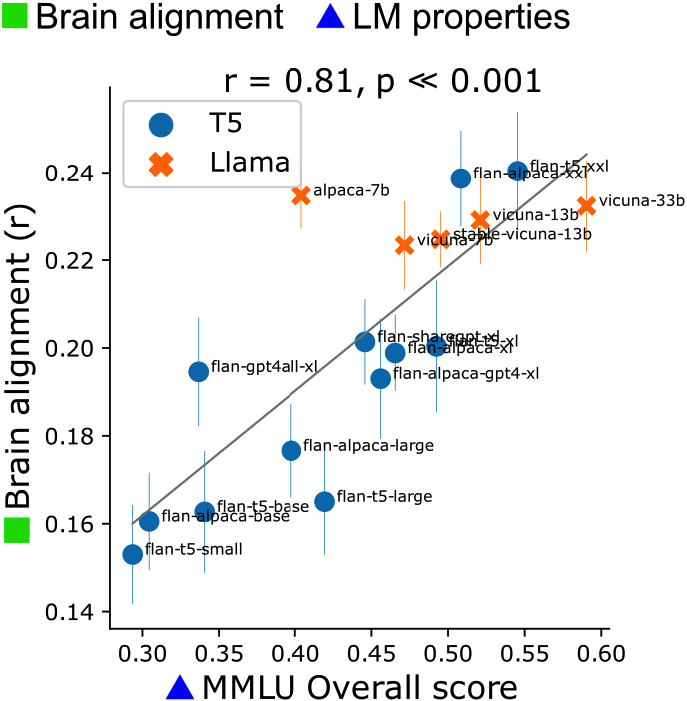
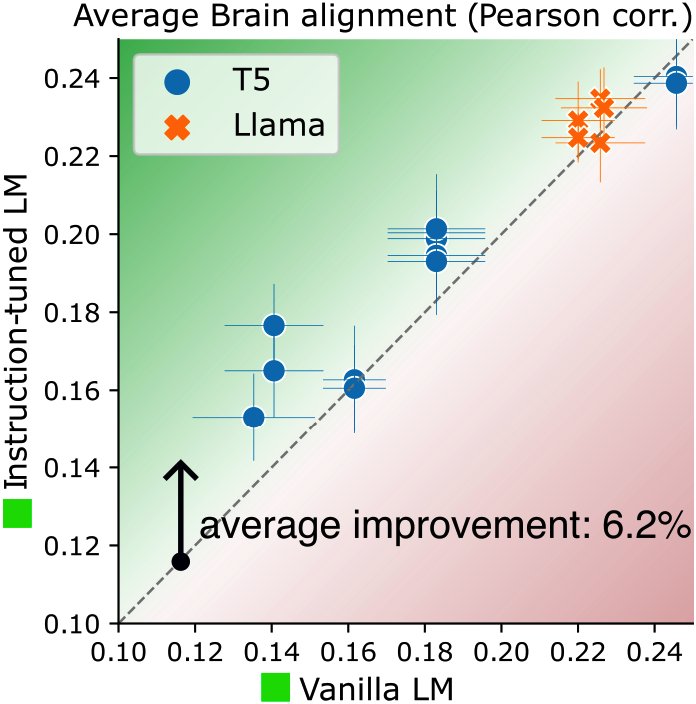
Khai Loong Aw, Syrielle Montariol, Badr AlKhamissi, Martin Schrimpf, Antoine Bosselut COLM, 2024 arXiv Our goal is to build better, more human-like, and more predictively accurate models of language processing in the human brain by using NLP techniques. We show that instruction-tuning improves the alignment of LLMs with human brain activity, with model size and world knowledge playing key roles. |
|
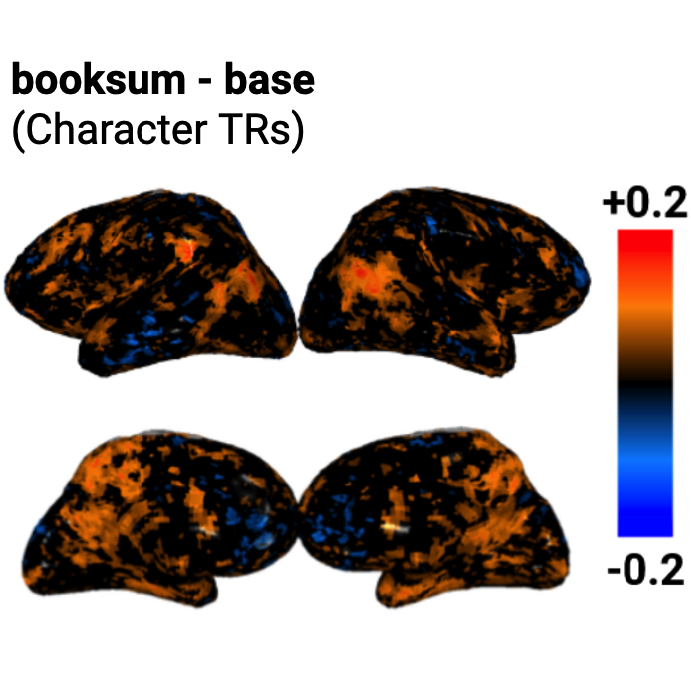
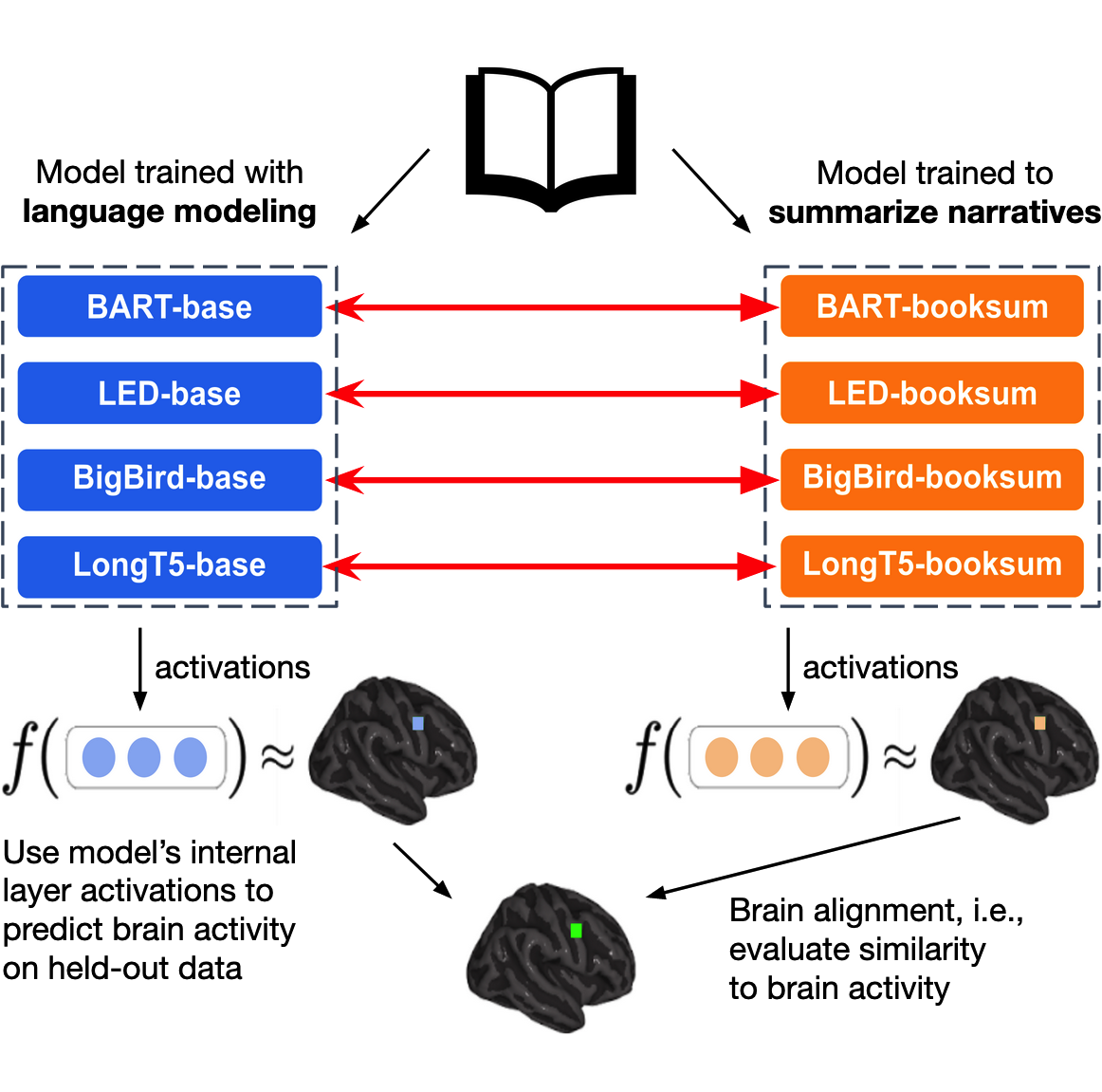
Training language models to summarize narratives improves brain
alignment
Khai Loong Aw, Mariya Toneva ICLR, 2023 (Spotlight) arXiv / GitHub Our goal is to improve LLMs by taking inspiration from language processing mechanisms in the human brain. Our key insight is identifying that humans do not just passively predict the next token, but actively summarize and distill information when reading. We show that training language models to summarize narratives (i.e., deeper understanding of characters, emotions, and relationships) results in richer representations that are more aligned to human brain activity. |